Solar pool heating with solar collectors
NaturaTemp solar pool heating combines solar water-heating panels with a smart controller. The sun heats your pool in every season, and a heat pump tops up automatically only when needed, so you swim more months a year on a lower electricity bill. We design and install solar pool heating across Israel: in private homes, zimmers, hotels and country clubs.
What you see in the app
Sample data- A site survey and a detailed quote before any work
- Designed and installed by our engineers
- 5-year warranty and support after installation
What we install
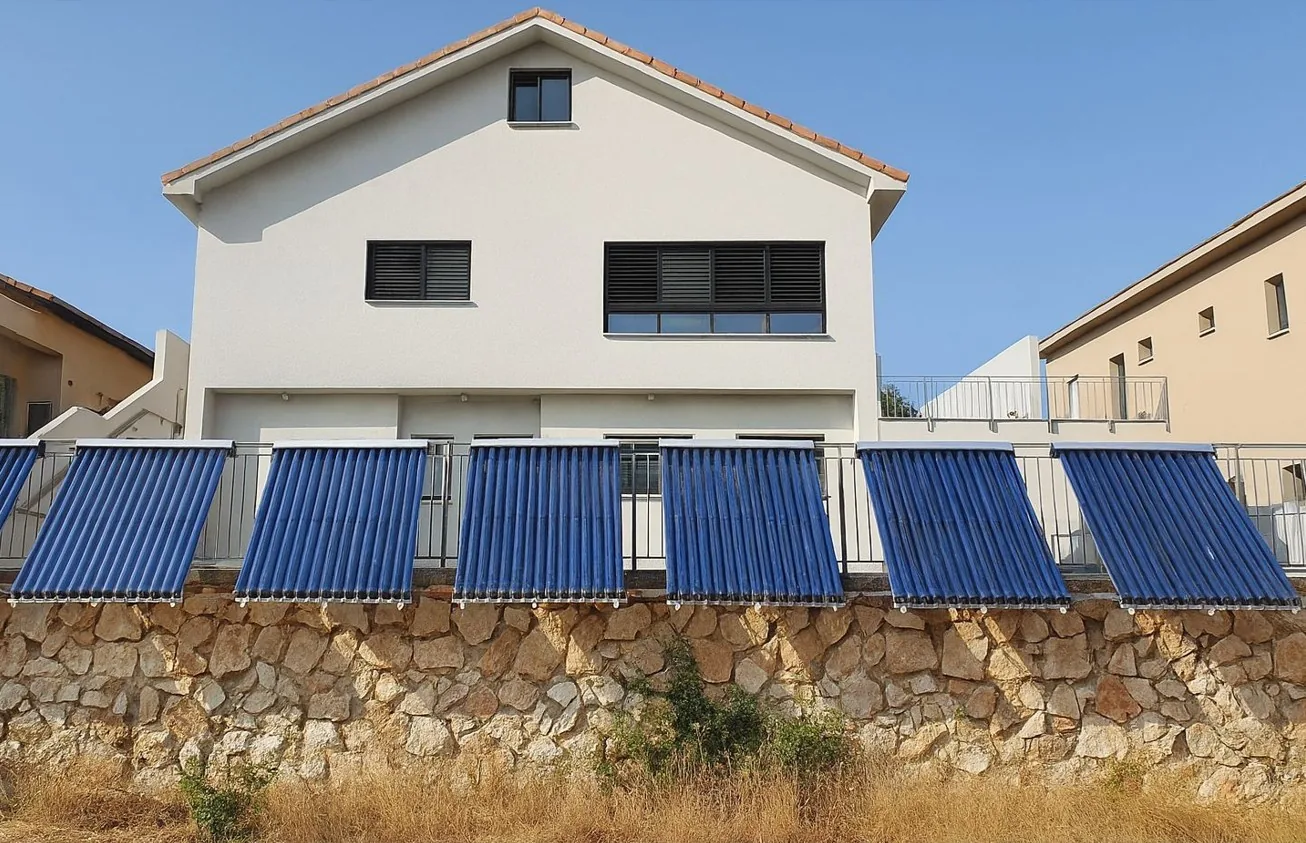
Solar water-heating panels made of glass vacuum tubes. Solar collectors heat water rather than make electricity, and keep working on cold, overcast days.
What the system includes
- Solar water-heating panels, sized to your pool and the months you swim
- A smart controller that switches on the heat pump automatically, only when the sun isn't enough
- A heat pump as backup, running fewer hours
- Remote monitoring and control from your phone or computer
How solar pool heating works
A solar pool heating system collects the sun's heat in the panels and carries it to the pool water, while a smart controller decides when to switch on the heat pump.
The panels collect heat
The panels, solar collectors made for pool heating, are built of glass vacuum tubes. They absorb the sun's heat and keep working when it's cold and overcast outside. The number and type of panels are chosen to suit your pool.
The heat goes to the pool
Heat from the panels goes into the pool water. The system connects to your existing pool equipment, in most cases with no changes to the pool structure itself.
The smart controller decides
The controller keeps checking temperatures and acts on what the system needs. When the water is below your target and the sun isn't enough, it switches on the heat pump automatically.
Remote monitoring and control
From your phone or computer you follow the pool temperature and system status and control the system. Many processes run automatically, as far as the equipment allows.
Hybrid pool heating: solar collectors and a heat pump
On days with enough sun the collectors can cover a large share of the heating; at night and on cloudy days a heat pump tops up what's missing. The controller switches it on automatically, only when the water is below your target and the sun isn't enough. So the heat pump runs fewer hours: a smaller bill, and the heat pump may last longer.
If you already have a pool heat pump, it can usually be connected to the system. What the controller can do with it — only switch it on and off, or also adjust its output — depends on the model; we check this at the site survey.
Full comparison: Heat pump vs solar pool heating
Does solar pool heating work in winter?
Yes. The vacuum tubes keep heating water in every season: spring and autumn, summer and winter too.
In winter the pool itself loses more heat, especially at night. So winter pool heating is planned as a whole system:
A pool cover at night
The US Department of Energy puts the possible saving from covering a pool when it's not in use at 50–70% of heating costs. The sun's heat stays in the pool and is used most efficiently, and the heat pump runs far less.
Panel position and angle
Our engineers set the panels' orientation and tilt on site to match how you use the pool: someone who swims mainly in winter gets a different angle from someone who swims mainly in summer.
A heat pump
It tops up what the sun can't cover, at night and on cloudy days.
How many solar panels does a pool need?
It depends on the pool's volume, whether it's indoor or outdoor, whether it has a cover, and the months you want to swim. Our engineers calculate the exact number at the site survey.
You need more panels for an outdoor pool without a cover, for winter swimming, or for water above 30°C; a night cover and an indoor pool bring the number down.
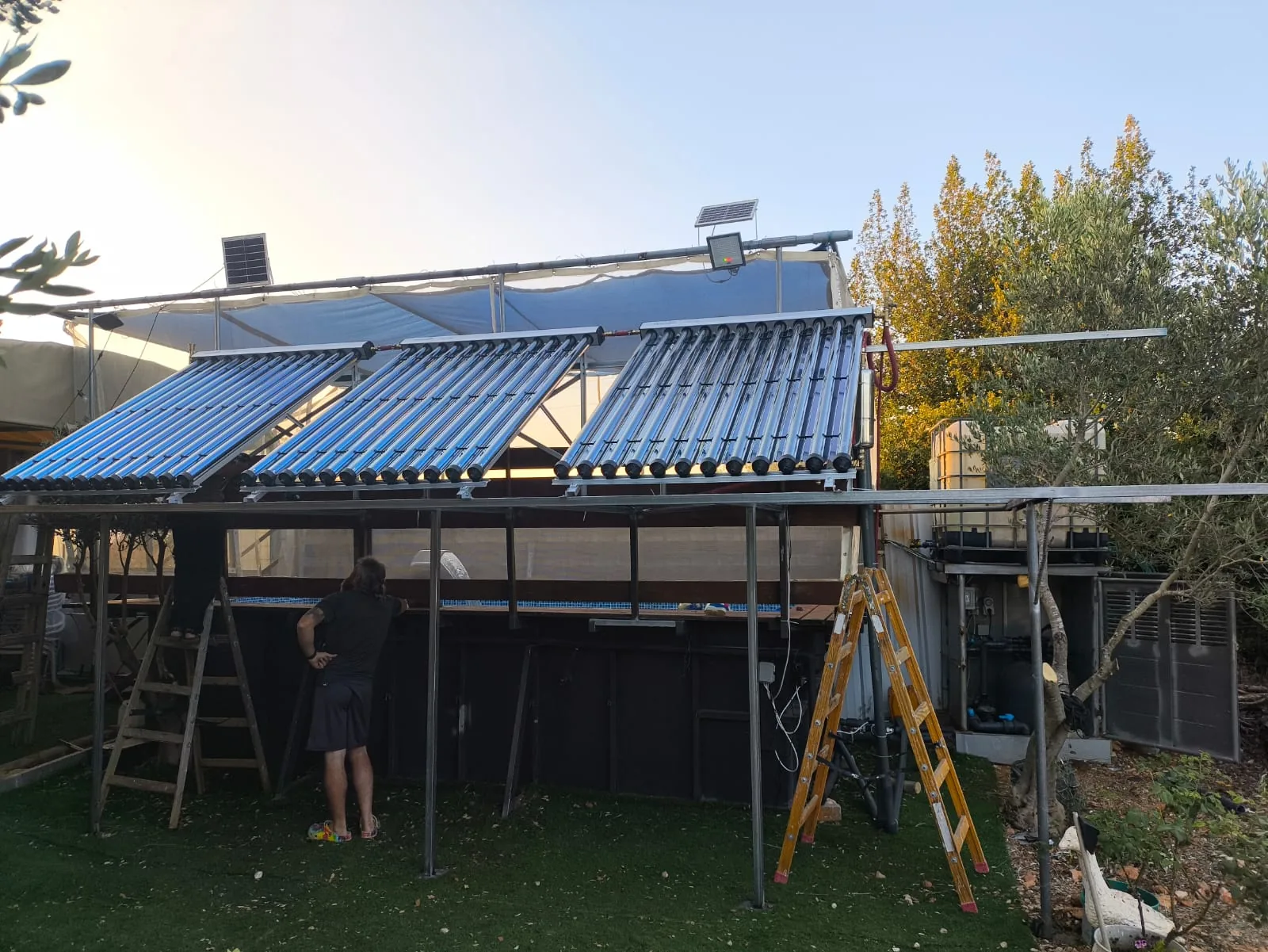
For example: a 12 m³ outdoor pool in northern Israel got 3 panels and no heat pump, for warm-season swimming. How many you need depends on the months you swim and your target temperature.
Pool heating for homes and zimmers
NaturaTemp's pool heating system uses the same components for every kind of pool; only the number of panels, the controller's priorities and the backup change.
Heating a home pool
For a home pool, the goal is usually a longer swimming season. With solar heating you can swim in spring, autumn and even winter without a high electricity bill. Do you also have a jacuzzi or underfloor heating? Plan it all as one system: in winter the panels heat the house, in summer the pool, so they work all year.
Pool heating for zimmers
In a zimmer, the pool and jacuzzi must be warm for every booking, even in midwinter. The same system can also heat the guest units' hot water and the rooms themselves.
Heating public pools, therapy pools and country clubs
At country clubs, sports centers, municipal pools and hotels, heating large swimming pools is one of the facility's biggest costs: many of these pools are indoor and open all year. Here the panels don't replace the existing heating; they take over a large share of the load.
Therapy pools and jacuzzis
They need higher water temperatures, so heating them costs the most. Vacuum tubes heat water to these temperatures too.
Several pools and the showers
One system can heat the pool, the therapy pool, the jacuzzi and the hot water for the locker-room showers, which use a lot of hot water in the evening, after the gym.
The existing system stays
Gas boilers or heat pumps keep working as backup and run fewer hours; we check how to connect them at the engineering survey.
If you heat with gas today
There are three ways to go, and the facility's needs decide which: add panels and keep the gas as backup; add panels and a heat pump and keep the gas as backup; or replace the gas with a heat pump plus panels. For each option we calculate the saving from your gas price and consumption.
Designed for each facility
We look at pool volumes, opening hours, consumption and the existing system, and size the panel field so it's used all year.
A hotel that also wants to connect the rooms' hot water and space heating: solar water heating for hotels and zimmers
Which pool heater is cheapest to run: heat pump, electric, gas or solar?
For running costs, a solar pool heater is the cheapest: a kWh of heat from the panels costs a few agorot, against about ₪0.13–0.25 with a heat pump, about ₪0.64 with direct electric heating and roughly ₪0.60–1.20 with gas.
| Heating method | Cost per kWh of heat |
|---|---|
| Solar panels | A few agorot, just the electricity to run the system |
| Heat pump | About ₪0.13–0.25, depending on season and water temperature |
| Direct electric (heating element) | About ₪0.64 |
| Gas, 48 kg cylinder | About ₪0.60–1.20 |
Electricity at the Israel Electricity Authority household tariff from 1 July 2026 (63.52 agorot per kWh incl. VAT) and typical heat pump COP of 2.5–5. Gas from the Ministry of Energy price survey in Haifa (June 2026): a 48 kg cylinder cost ₪308–616, at about 85% heater efficiency. Large facilities heated with bulk LPG or natural gas pay less per kWh, so there we calculate from the actual gas price. Installation costs differ widely by method and site, so we quote them per site.
So the real question is rarely "solar or heat pump?" — it's how many hours the heat pump runs alongside the collectors.
The full guide, with a worked example: How much does it cost to heat a pool
Full comparison, including when a heat pump alone is enough: Heat pump vs solar pool heating
Project: a private pool in northern Israel, no heat pump
A private home in northern Israel, 2025: a 12 m³ outdoor pool heated by the sun alone.
Specification
- Pool: 12 m³, outdoor
- Panels: 3, on a frame above the pool
- Backup: none
- Control: smart controller that holds the temperature automatically
Result
- Stable water temperature through the season
- The sun is the only heat source: no heat pump and no heating element
Solar pool heating FAQ
What people ask us before installing solar heating for a pool.
How long does installation take?
On a home pool, on-site work usually takes a few days. It follows a site survey and design, and for the first weeks after start-up we monitor the system remotely and fine-tune the settings to the weather and how you use the pool. Larger pools depend on the scope.
What's the difference between a solar pool heating panel and a solar electricity panel?
A water-heating panel collects the sun's heat and passes it straight to the water. A photovoltaic panel makes electricity, and to heat a pool with it you still need an electric heater or a heat pump. We install water-heating panels.
Can solar heating be added to an existing pool?
Yes. The system connects to your existing pool equipment, with no draining and, in most cases, no changes to the pool structure itself. If you have a heat pump, we check at the survey how to connect it too. You need a spot that gets sun most of the day — a roof, a wall or the ground — as close to the equipment room as possible.
Where do the panels go?
On a roof, a wall or a ground frame. Our engineers assess the exact position, orientation, shading and tilt on site, based on the seasons you swim in. If the only free spot is in shade most of the day, we'll tell you upfront that the system won't pay off — better to know before installation.
Is a solar pool heater enough on its own?
Not always. On a 12 m³ outdoor pool we installed 3 panels and no heat pump, and the water stays stable through the season. For winter swimming and larger pools, a heat pump usually stays as backup. See the section on hybrid pool heating above.
Won't the pool overheat in summer?
No. The controller holds the target temperature you choose and protects the system from overheating. If the system also heats your hot-water tank or a jacuzzi, the controller sends the summer surplus there.
How much does solar pool heating cost?
We don't publish a fixed price because every site differs: the number of panels, the roof, the pipe runs and the controller. After the site survey you get a detailed quote for your pool. Running costs for each method are in our guide: how much does it cost to heat a pool.
What about warranty and maintenance?
The system comes with a 5-year warranty. The panels have no moving parts, so maintenance is light: an annual check and dusting of the tubes. The app shows temperatures and system status, so anything unusual is easy to spot.